Matrix Madness
In theory, the matrix combines functional depth with cross-functional breadth. In practice, it creates parallel accountability and serial confusion.
The world endures because of those with character. Valluvar credits character with structural integrity. The blueprint says matrix. Everyone says confusion. Your people report to three bosses simultaneously. Functional boss. Regional boss. Project boss. Each has different priorities. Different metrics. Different expectations. Nobody’s aligned because alignment requires a single direction. The matrix provides three. In theory, the matrix combines functional depth with cross-functional breadth. In practice, it creates parallel accountability and serial confusion.
Tata Group operates 100+ companies across 150 countries, and every one of them has two reporting lines: one to its own company board, and one to the Tata Trusts, which own 66% of the parent holding company. I found the structural tension documented in the 2016 crisis: when Cyrus Mistry was removed as chairman, the mechanism used wasn’t a board vote but a Tata Trust directive. The reporting line trap means that no Tata company CEO ever knows which master they serve: the company’s commercial board or the family’s philanthropic trust.
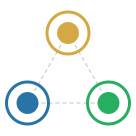
Three norths on one compass produce zero navigation. In navigation, magnetic interference from nearby metals can cause a compass to show multiple magnetic norths. The compass has three readings. None is reliable. The navigator can’t determine direction. Matrix organisations create the same effect: three reporting lines produce three directions. Each direction is valid. None provides clear navigation. The employee is the navigator with a broken compass: moving constantly, arriving nowhere.
Ask one person in your matrix: ‘When your three managers disagree, how do you decide what to do?’ Their answer reveals whether the matrix is a structure or a cage. If they say ‘I prioritize whoever shouted last,’ the matrix isn’t working. It’s just multiple bosses pretending to be a system.
That multi-directional paralysis has a name. Matrix Madness. And once you see it, you can’t unsee it.
Untie The Knot
Uproot
Matrix confusion existed because accountability was shared without resolution mechanisms. Three bosses meant three directions with no tiebreaker.
Navigate
Every matrix role has one primary accountability owner. The other reporting lines provide input, not authority. Conflict resolution is pre-defined.
Tool
DMG / Decision Authority: the protocol that assigns primary accountability in matrix structures. When authority is primary (not shared), navigation becomes possible.
Implement
Ask one person in your matrix: when your managers disagree, how do you decide? If the answer involves guessing, the matrix needs a tiebreaker.
Emerge
When matrix accountability is primary, employees navigate with clarity, conflicts are resolved by protocol instead of politics, and the structure enables instead of exhausts.